About


Mission
NorthStar’s mission is “to help young people overcome poverty, discrimination, educational disadvantage, violence, and other adversity through learning essential competencies and hopefulness with which they can transform their lives and communities. In advocacy and public policy, we as a minority-led nonprofit organization advance diversity as a strength and resource to open pathways to create a better life.”
Vision
We partner in and with our community to create brighter futures.
Creating brighter futures
NorthStar’s first initiative began with community childcare, and that commitment remains at the core of our mission today. Since then, NorthStar has grown from a single childcare center into a multi-service agency with an organizational budget of more than $8 million. We now operate comprehensive wraparound programs and services for over 2,000 participants—from birth through adulthood—who live in some of the most challenging circumstances. Our work is grounded in culturally competent, research-informed practices, and we remain steadfast in addressing structural racism and advancing equitable outcomes for the communities we serve.

OUR VALUES

BUILDING ON STRENGTH
We focus on the strengths of children, youth, and families—what’s right with them—rather than what’s wrong.

DOING WHAT IT TAKES
We meet children, youth, and families “where they’re at.” Our youth-serving programs include “24/7” availability; after-hours mediation in a family conflict can prevent a youth being removed from their home.

SCHOOL SUCCESS
Where schooling is the most reliable route out of poverty, we focus on school enrollment (keeping youth in regular schools whenever possible), consistent attendance, more positive attitudes toward school, higher grades, grade promotion, and educational goal-setting beyond high school.

CULTURALLY RESPONSIVE
We address the unique challenges faced by children, youth, and families of color in policy and practice—such as disproportionate representation in juvenile justice, special education, school discipline, and foster care. Cultural competency goes beyond ethnicity, also recognizing and valuing the strengths inherent in youth culture.

BUILDING PARTNERSHIPS
Recognizing that the complex challenges faced by disadvantaged children, youth, and families cross professional, bureaucratic, and agency boundaries, we have long been committed to collaborating with other organizations to expand, improve, and integrate services and supports.

CREATING OPPORTUNITY FOR ALL
Beyond providing community-based programs, we collaborate with families, government agencies, and partner organizations to remove historic barriers to educational and economic opportunity, increase society’s investment in children, and create pathways for all children and families to thrive.
History
NorthStar Learning Centers, a people-of-color-led nonprofit, was founded in New Bedford in 1974 during the civil rights movement. Its first initiative—community childcare—remains central to its mission: helping young people overcome poverty, discrimination, educational disadvantage, violence, and other adversities by developing essential skills and cultivating hope to transform their lives and communities.
As NorthStar has grown, it has maintained its commitment to culturally competent, research-informed services and addressing structural racism. Today, the organization provides wrap-around programs and services for participants from birth through adulthood, with a focus on those facing the greatest challenges. Recent expansions include the Early Education Academy, which consolidates two former locations and doubles NorthStar’s capacity to provide high-quality, full-time early education and care for children ages 0–5; specialized after-school programs; youth and family support initiatives; the HEAL Center for young adults recovering from gun violence and trauma; a mental health clinic; and collective impact initiatives that extend NorthStar’s reach beyond direct service.
NorthStar’s impact is evident in its outcomes: 96% of early childhood “graduates” are kindergarten-ready, compared to just 60% statewide.
In 2025, NorthStar was honored with the Massachusetts Housing Investment Corporation (MHIC) Community Development Award for the new Early Education Academy and the NAACP New Bedford Community Impact Award. The organization has also received citations from the Massachusetts Senate, House of Representatives, and the City of New Bedford.
Leadership
NorthStar Learning Centers is committed to ensuring that employees are informed, equipped, and committed to promoting the well-being and competencies of the children, youth, and families we serve. We respect and care equally about our employees and strive to provide the best pay, benefits, and working conditions we can. The policies and procedures that you can access on this website are intended to collectively provide a program and work environment in which both program participant and employee interests are acknowledged, respected, and supported.

Maria Rosario
Executive Director

Pam Cruz
Associate Director

Tommy Pace

Hilda Ortiz
Director Enrollment
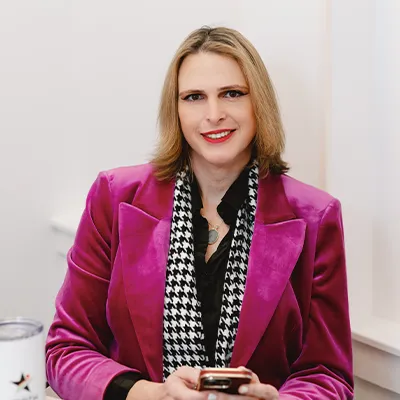
Victoria Wolfe
Director Dev. Communications

Jennie Antunes
Director Education

Renee Ledbetter
Director Shannon

Jennifer Torres
Director Youth & Family

Ja'nell Henry
Director Schooner

Brendan Johanson
Director SSYI
Eric Gilbarg
Director of the Heal Center, Skip Hall

Brandt Nimtz
Director Nutrition
Our Community
New Bedford is a mid‑sized urban city in southeastern Massachusetts with an estimated population of about 101,500 residents in 2026. The city has a rich industrial and cultural history that once drew immigrants to work in textile mills and the whaling industry; although much of that industrial base has diminished, New Bedford remains diverse and vibrant. An estimated close to 40% of residents age five and older speak a language other than English at home, reflecting deep cultural and linguistic diversity.
Like many older urban centers, New Bedford has experienced significant economic transition. Employment in manufacturing remains an important sector but is smaller than in past decades; recent data show manufacturing jobs account for just over 12% of total employment, with around 4,500–5,000 people employed in the sector. This shift has contributed to economic disinvestment and persistent challenges in educational and economic outcomes.
Educational outcomes in the community illustrate ongoing disparities and progress. As of the most recent reporting, New Bedford High School’s four‑year cohort graduation rate reached a historic ~87% for the Class of 2025, a notable improvement over earlier years. Despite these gains, proficiency on state academic assessments remains low in comparison to statewide results, and school achievement outcomes continue to be an area of focus for improvement (e.g., test result scores indicate areas for academic growth).
Educational attainment among adults in New Bedford also trails statewide averages: a smaller share of residents hold bachelor’s degrees or higher compared to the broader Massachusetts population, and a larger share have a high school education or less, limiting access to quality employment and long‑term economic mobility.

These statistics highlight both the strengths and challenges facing New Bedford — from rich linguistic and cultural diversity to persistent obstacles in education and economic opportunity — and frame the context in which NorthStar works to expand opportunity for all children, youth, and families.